Case study: Fidelity Fit Fitness App


Scope
Desk Research
Competitor Analysis
Survey
Persona
UJM
User Flow
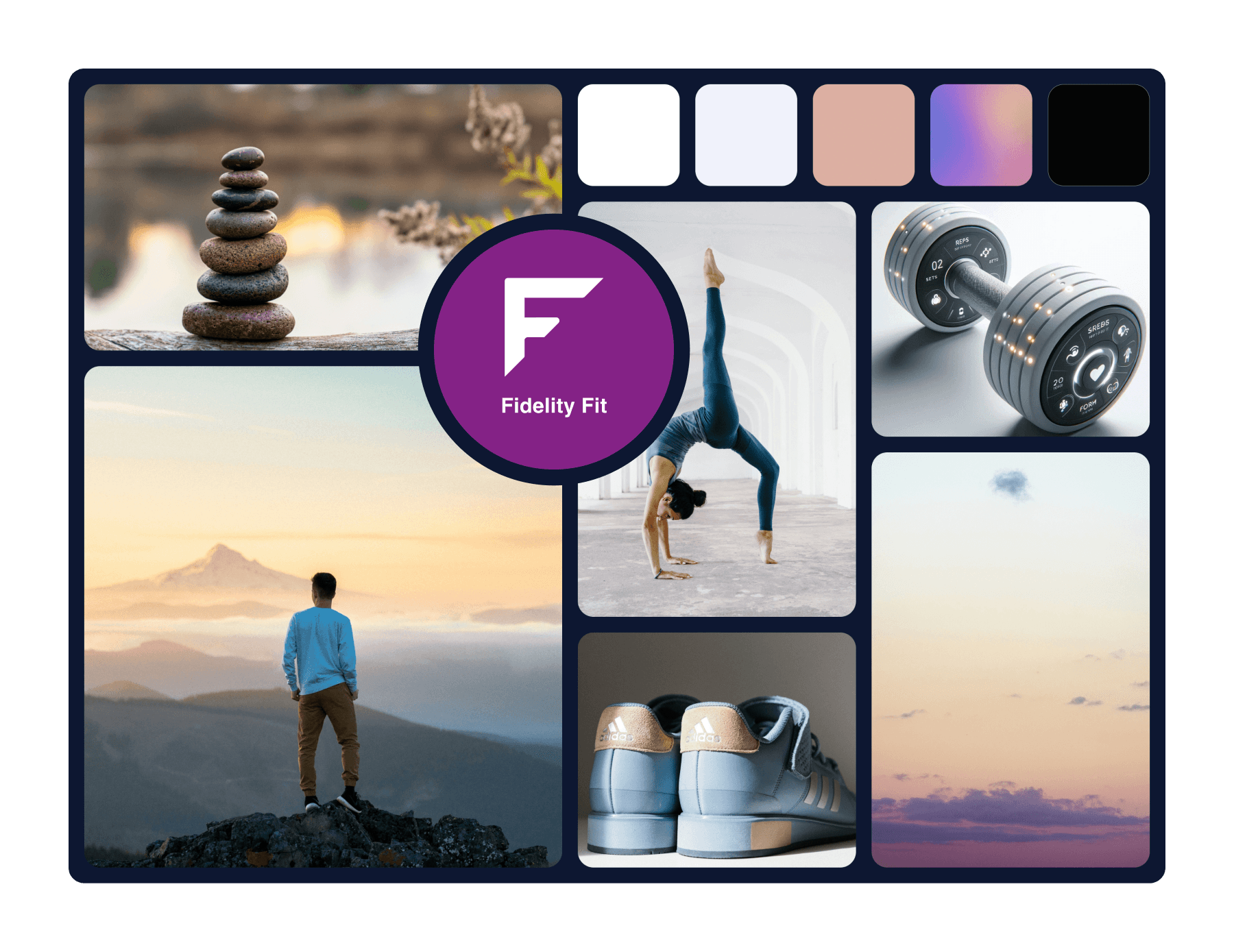
Moodboard
Style Tile
Design System
Wireframes
Visual Design
Prototype
User Testing
User persona Jenny represents many busy professionals who struggle to find time for exercise in their hectic schedules
75% of the survey respondents are 25–34 years old and equally split between male and female.
User persona Jenny is motivated to stay healthy but often finds herself overwhelmed by work, leading to inconsistency in her workouts.
We designed a solution that would help Jenny (and users like her) prioritise fitness without adding more stress or time commitments to her day.
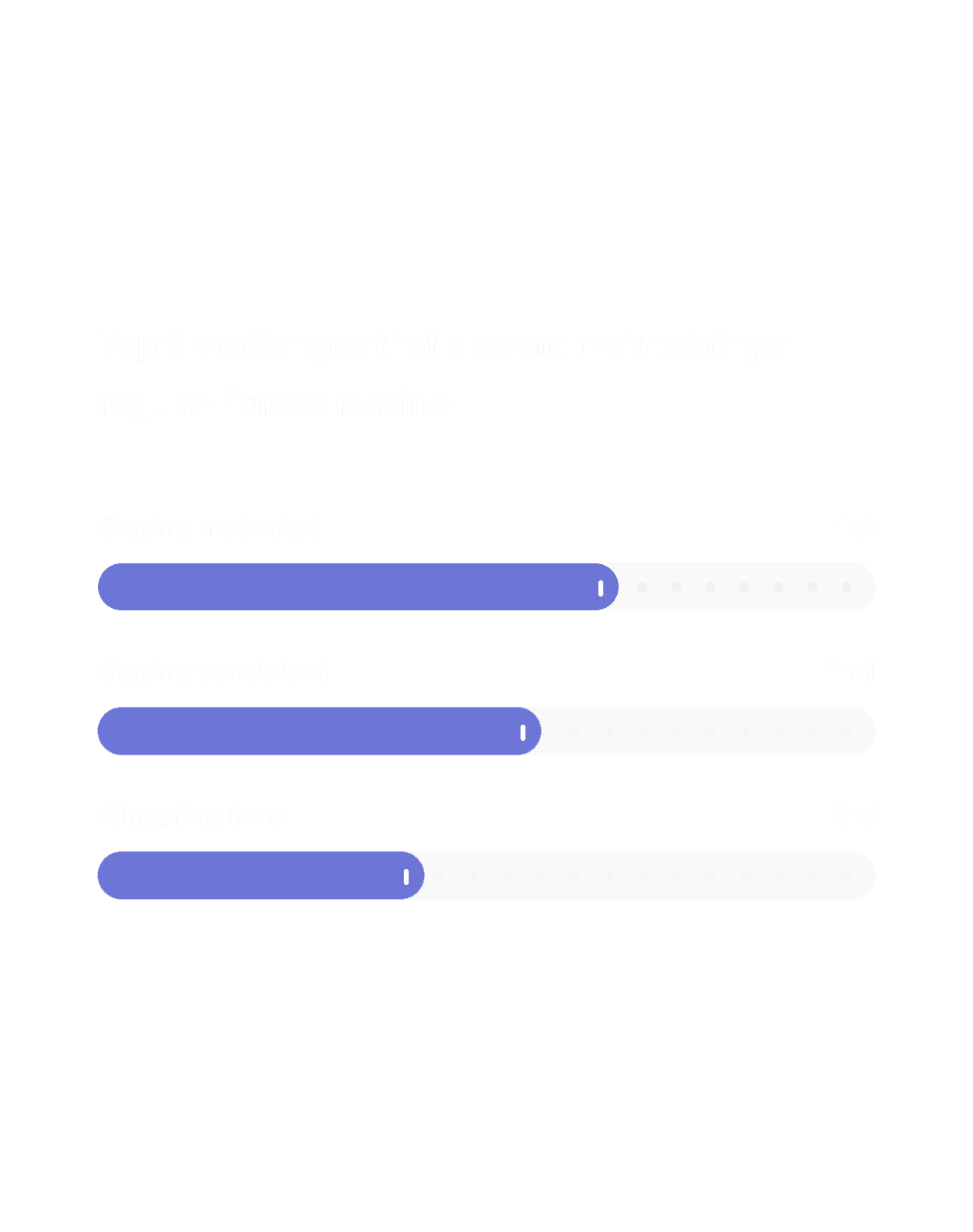
Visual representation of the survey findings

Meet user persona Busy Jenny
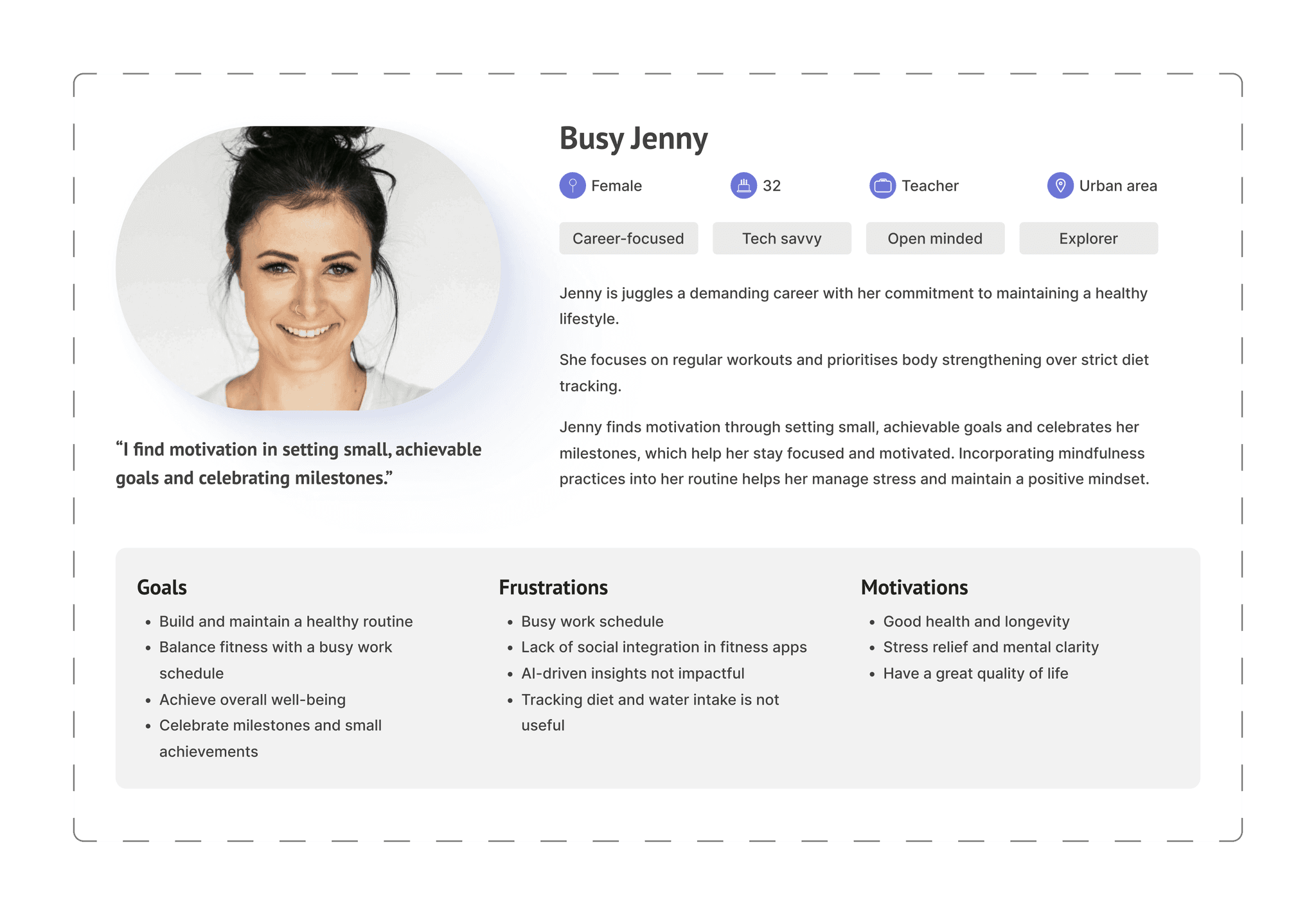
Visual representation of the User Persona
92% of Busy Professionals Are Motivated by Health Improvement
The majority find it challenging to stay consistent and motivated, and they struggle to allocate time for exercise. They also feel stressed about not exercising, as their primary goal is to stay healthy.
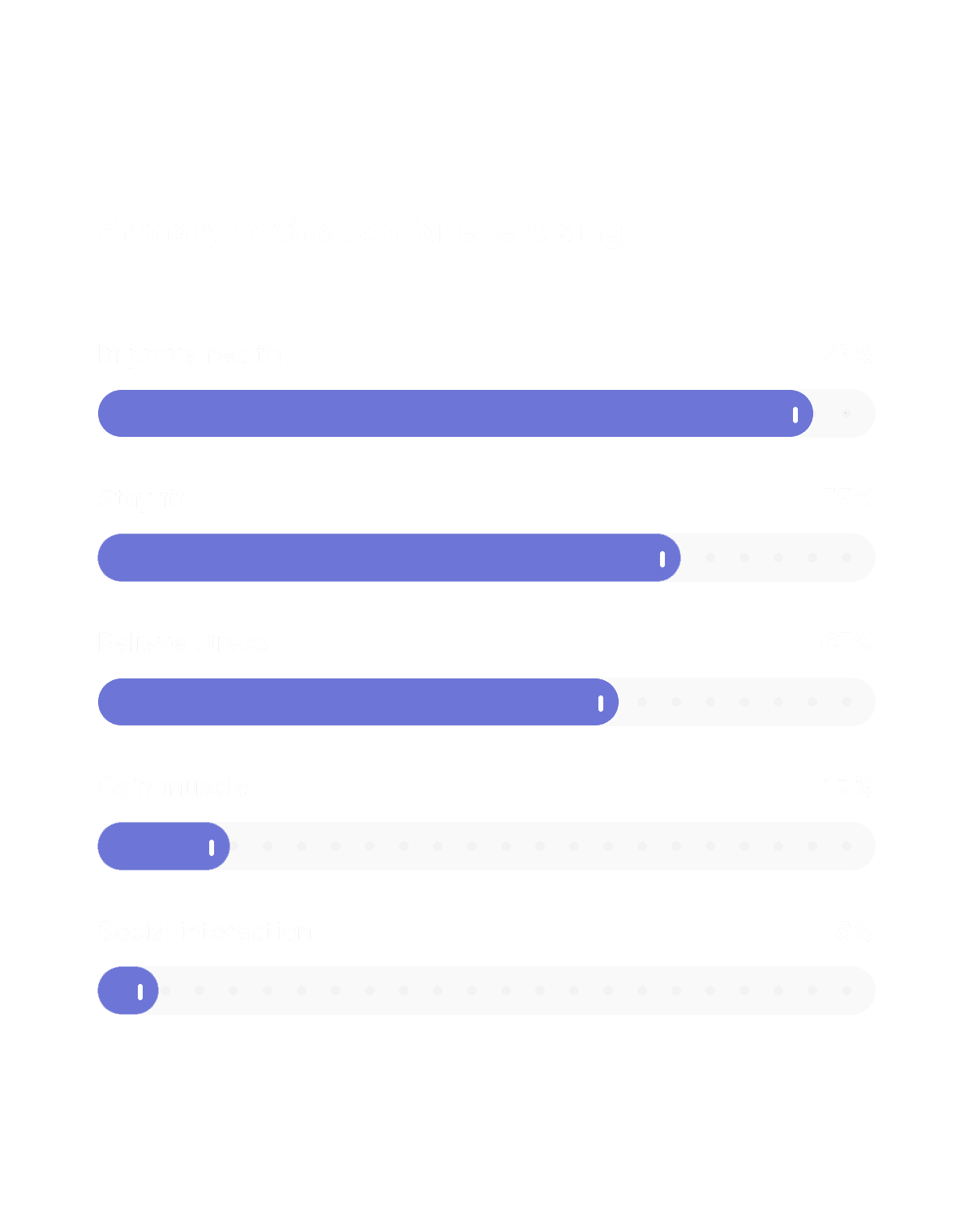
Visual representation of the survey findings


The fitness market is growing rapidly, but many products still fail to deliver a solution for people with tight schedules
User Motivations and Behaviours
✦ Users engage with fitness apps for convenience, motivation, progress tracking, and social interaction.
✦ Demographic differences shape motivations: younger users seek social validation and competition, while older users focus on health management and personalised guidance.
Pain Points and Areas of Improvement
✦ Complex interfaces, lack of personalisation, inaccurate tracking, and limited social features cause frustration.
✦ Difficulty integrating with wearable devices and providing accurate data leads to a lack of trust and reduced engagement.
Emerging Trends and Innovations
✦ Gamification (e.g., challenges, rewards, progress tracking) is effective in boosting motivation and engagement.
✦ Personalisation (e.g., tailored workout plans and nutrition recommendations) is a key trend.
Improvements to Fitness Apps That People Desire






Creating Pool of Ideas
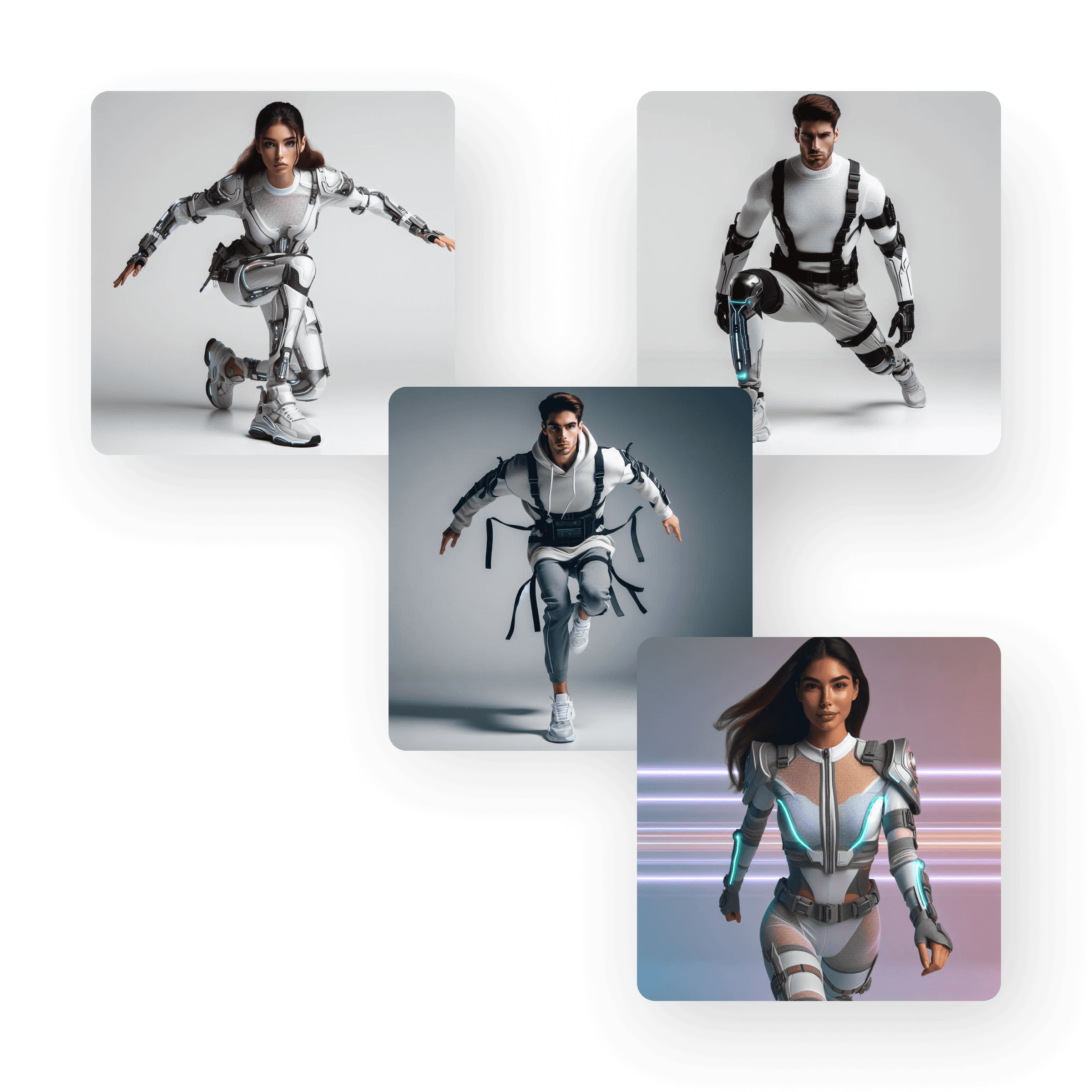
During the ideation phase, I didn't limit myself to specific ideas on how to tackle the problem. As a result, I came up with some fun solutions. To make them more visual, I added some images, including a few generated with AI, which was a great way to spark further creativity.


Narrowing Down Ideas
Since our audience is always on the go, I needed to create a solution that is easily accessible. Therefore, a mobile app would be the perfect solution for busy professionals.
How will this app stand out from other apps on the market?
To achieve this, I narrowed down the pool of ideas to the top four inspired features that cater specifically to the needs of busy professionals.
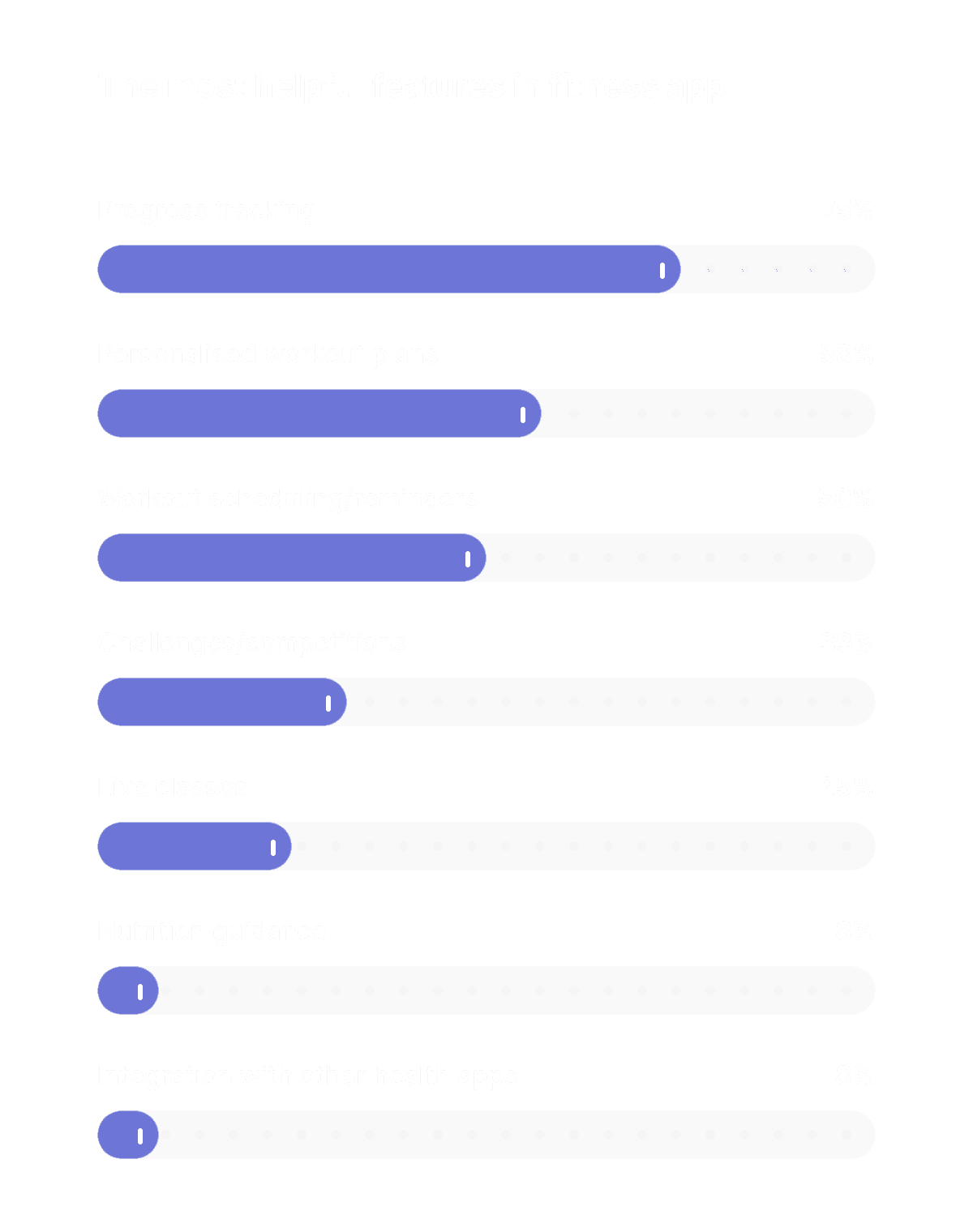
The most helpful features according to the user survey
AI-Powered Scheduling Assistant
✦ Analyses schedules, goals, and preferences to recommend optimal workout and mindfulness times.
✦ Adapts in real-time to calendar changes, ensuring consistency without disruption.
"Snackable" Workouts and Mindfulness Breaks
✦ Offers 5-10 minute sessions to fit into busy schedules.
✦ Sends intelligent notifications to maximise brief windows of time for fitness and mental well-being.
Personalised Routine Builder
✦ Customises fitness plans based on user goals, fitness levels, and time availability.
✦ Adjusts dynamically as users progress for a more effective and engaging experience.
User Journey Map
The scenario focuses on Jenny, who often finds herself cancelling workouts due to unexpected work demands, leading to frustration.
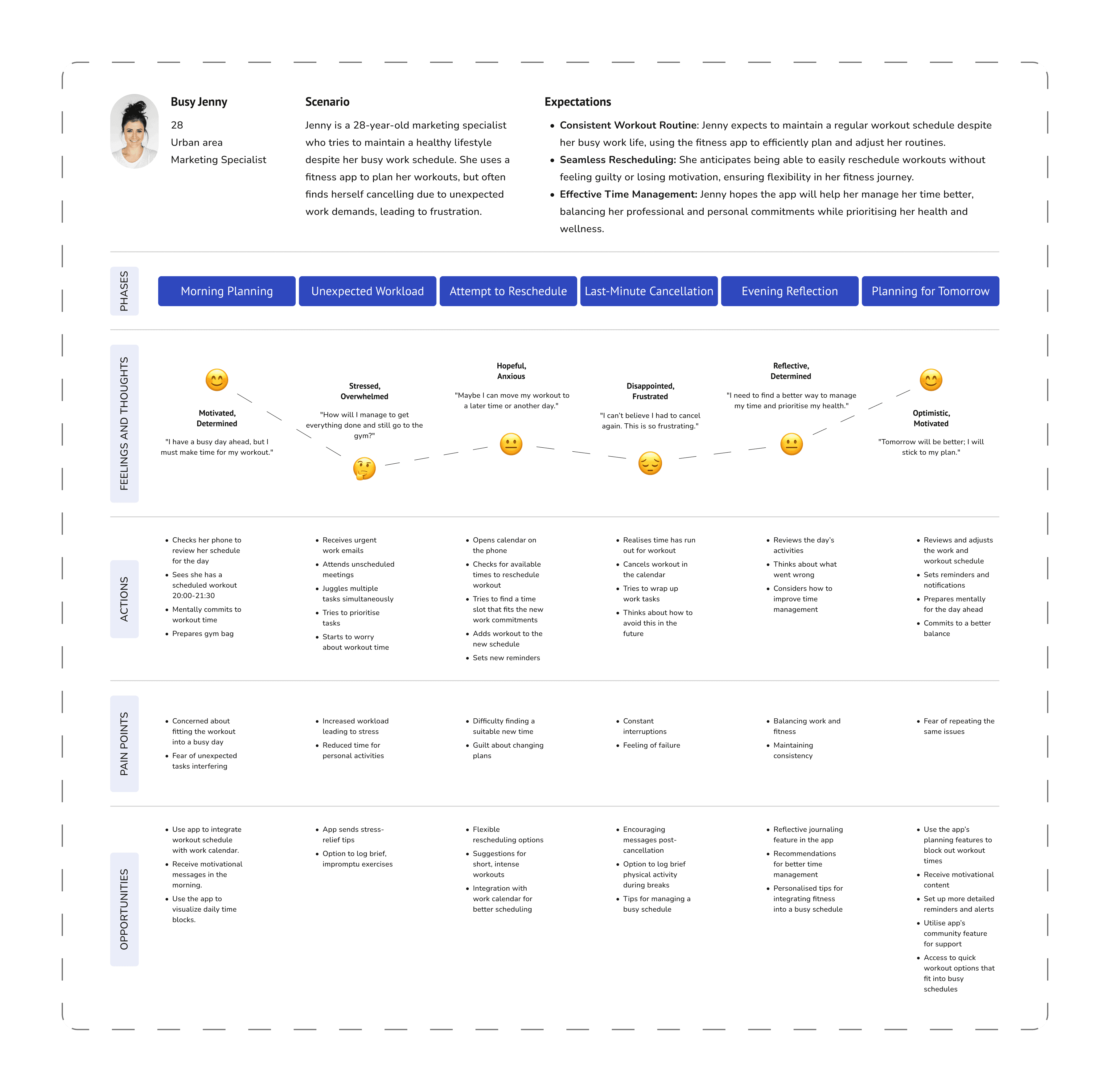
Visual representation of the User Journey Map
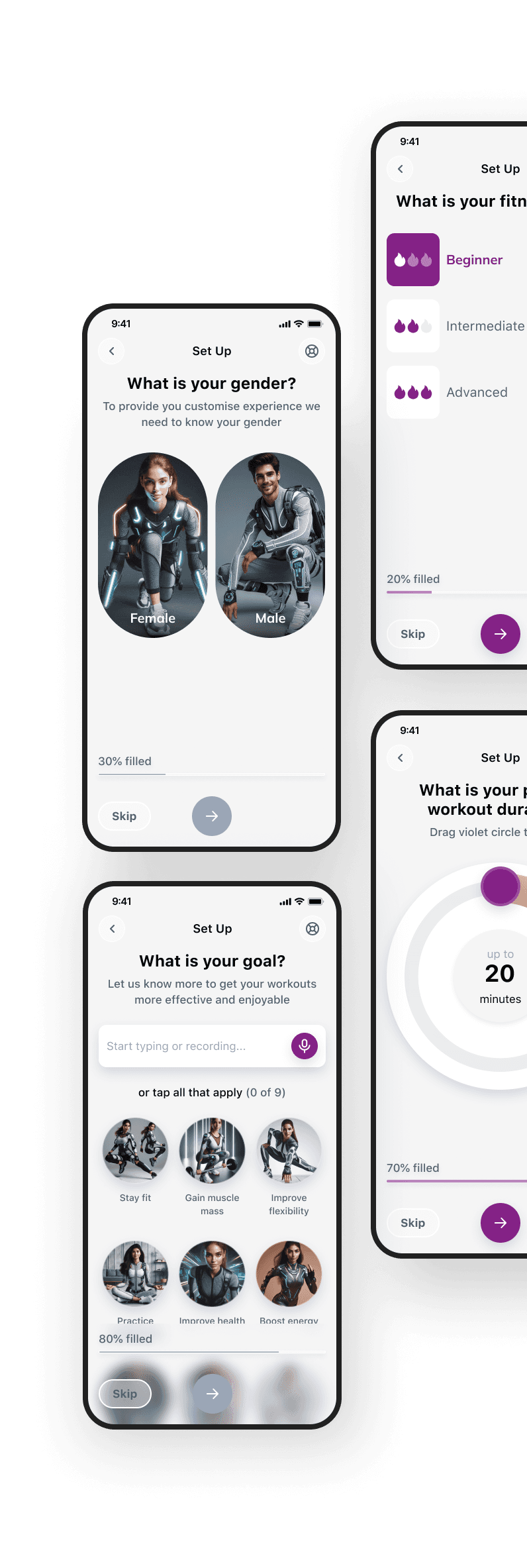
Visual Design